Showing posts with label miyagi. Show all posts

Monday, September 12, 2011

Tohoku Chopper Keychains! ♥ ご当地チョッパーマン: 東北

Part III of my gotouchi (ご当地, location limited) Chopper Keychains! Part I was Chubu, part II was Kantou (: Yes it's a collection, I do not think I can actually use up all of these keychains ^^

Akita limited, Namahage version
秋田限定: なまはげ

Namahage is a festival/ritual/event unique to the Akita prefecture.
There's also a Kantou Festival version, but I couldn't find it :(

Yamagata limited, Cherry version 2
山形限定: さくらんぼ2

Yamagata prefecture is famous for its cherries and cherry products.

Fukushima limited, Akabeko version
福島限定: あかべこ2

Akabeko is a traditional red cow toy from the Aizu region in Fukushima.
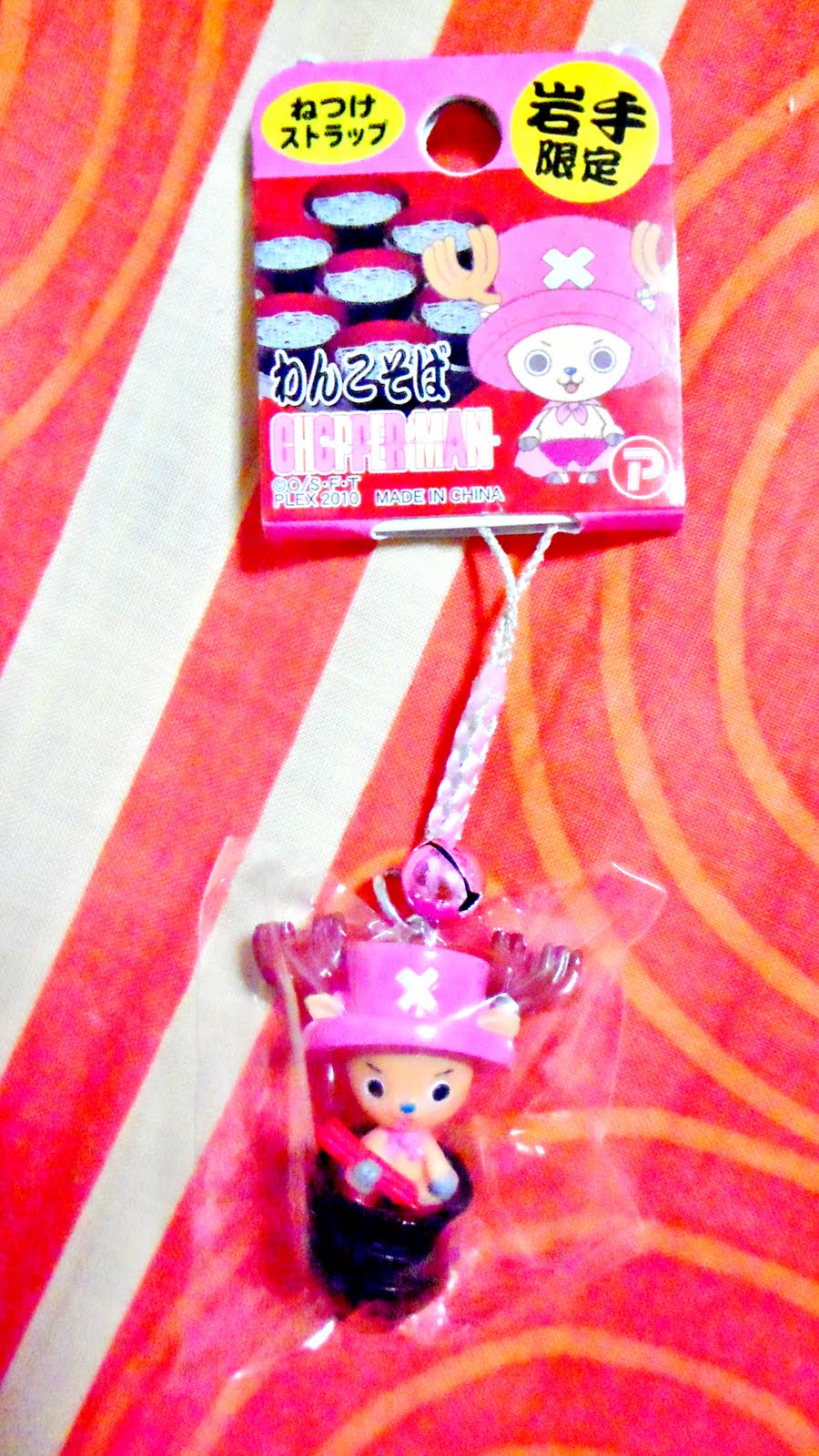
Iwate limited, Wanko Soba version
岩手限定: わんこそば

Iwate is famous for its soba.

Miyagi limited, Gyutan version
宮城限定: 牛タン

Miyagi is famous for its delicious gyutan.
There's also a Tanabata Festival version, but I couldn't find it! :(
Miyagi is the prefecture in which Sendai is located.

Fukushima limited, Byakkotai version
福島限定: 白虎隊

The Byakkotai was part of the Aizu forces, located in Fukushima.


I know that the Tochigi prefecture is part of the Kantou region and not Tohoku, but it borders Fukushima, which is part of Tohoku, and I went there while on the Tohoku trip, so I'm gonna lump the Tochigi Chopper keychains together with the Tohoku ones, since I got them together ~ (:

Tochigi limited, Sano Ramen version.
栃木限定: 佐野ラーマン

Tochigi is famous for Sano ramen.
It's famous for strawberries as well, but I couldn't find the strawberry version :(

Utsunomiya limited, Gyoza version 2
宇都宮限定: 餃子2

Utsunomiya is famous for its gyoza.
Utsunomiya is the capital of the Tochigi prefecture.

Nasu limited, eggplant version
那須限定: 茄子

A word-play on the name.
The word for eggplant in Japanese is "nasu" (茄子),
though a different kanji from the place "Nasu" (那須).
Nasu is a highland region located in the Tochigi prefecture.


The other Chopper Keychains I've collected are from the Chubu and Kantou regions~

Wednesday, August 24, 2011

Sendai Airport ♥ 仙台空港

After the Sendai Tanabata Festival, we visited Sendai Airport, which was damaged and flooded by the tsunami, in which floodwaters reached a height of 3.02m.

It was heartwarming to see various messages of support and encouragement from all over the world and all over Japan, and they made the airport brighter and cheerier. Each and every petal of the sunflowers here is a message from a different individual. They are hoping that Sendai can be like sunflowers; bright and shining. This is from passengers and staff of ANA.

These messages are from visitors to Haneda Airport in Tokyo.

So are these.

This colorful one is from Kansai International Airport (KIX) in Osaka.

Miyagi's mascot with a message of encouragement. Sendai is located in the Miyagi Prefecture.

The blue line around the pillar shows the height the floodwaters reached when the tsunami hit, 3.02m.

Because the Tanabata Festival was underway, even the airport had some fukunagashi decorations, with words of encouragement on them. The board is promoting Hagi no Tsuki, a regional specialty confectionery of Sendai. It's really delicious!

More messages from all over Japan and the world, this time from JAL passengers and staff.

Cranes of well-wishes and support from Kyuushuu, the south of Japan.

Alongside the messages were photographs of when the tsunami hit, to serve as a reminder.
This was a photo from 17th March, about a week after the disaster.

This one is from 30th March, of the interior of the airport, almost 3 weeks after the incident.

Up till now the upper floors are still under going renovation.

We attended a short presentation on the airport and what happened when the tsunami hit. One of the speakers shared a story of how one of the airport staff, whose grandmother went missing during the earthquake, still showed up for work and greeted each and every passenger with a smile and tended to their needs. I felt my heart wrenching in sorrow for the staff, but at the same time it's really touching to know that such kindred souls exist.


In a mere 4 months, most of the damaged area has been rebuilt, and international flights resumed on 25th July 2011. The airport is now fully operational.


Friday, August 19, 2011

萩の月 ♥ Hagi no Tsuki

From the title, you can probably already tell that this will be about the lovely Hagi no Tsuki~ It literally translates into "Bush Clover Moon". Hagi, or bush clovers, are shrubby flowering plants grown usually for decorative purposes, a symbol of autumn. It is the official flower of the Miyagi prefecture, in which Sendai is located in.

Meant to resemble a harvest moon, Hagi no Tsuki is actually custard cream encased in a soft, fluffy sponge cake~ Despite the cream, it's very light and very delicious! It's a famous confectionery of Sendai, and is usually available only in Sendai. I kept seeing signboards of it while in Sendai, and wanted to try it, however I never got a chance to buy it :( However it is sold in Narita Airport, thankfully!

Hagi no Tsuki is produced by Sanzen.

The shelf life of each box is only 2 weeks, so consume them quickly! Keeping this in mind, you'd probably want to get these right before you leave Japan, not right after you arrive^^

Unwrapping the paper reveals a beautiful yellow box with blue and white hagi prints.

Inside the box, you'll see that each and every piece comes in an individual box, making this good for souvenirs if you want to give many people. All the wrapping is however a tad wasteful!

Beautiful box

Inside the box, the Hagi no Tsuki finally makes an appearance.
Inside this plastic is a packet of silica gel and another plastic wrapping the Hagi no Tsuki.

Extremely soft, fluffy sponge cake on the outside!

Yummy custard on the inside.

More information on Hagi no Tsuki in the enclosed brochures, which also feature the other products of the Sanzen. FYI there's a version with chocolate cream called Hagi no Shirabe (萩の調)

When I bought my box (from Narita Airport), I got a pretty Hagi no Tsuki shopping bag (:

So if you're ever in Sendai (they're available in most departments stores there) or pass through any airports in Japan, be sure to try this, it's really delicious! ☆

Sunday, August 14, 2011

Sendai Tanabata Festival 2011 ♥ 仙台七夕祭り

Tanabata is a Japanese festival celebrating the meeting of Orihime (Weaver Girl) and Hikoboshi (Cowherd). According to the legend, they are separated by the Milky Way and can only meet once a year on Tanabata.

The Sendai Tanabata Festival is one of the 3 major festivals in the Tohoku region, and each year, over 2 million people come to see the giant, exquisite, hand-made decorations

This year, the Sendai Tanabata Festival was held on 6, 7, 8 August.

Some of the beautiful fukinagashi.

Fukinagashi are streamers that symbolize Orihime, to wish for improvement in handicraft skills. During the festival, there are contests and prizes for the most beautiful and creative decorations.

Each of the little decorations are hand-made, have messages written on them and pasted onto the fukinagashi.

More colorful and gorgeous fukinagashi.
These ones have messages gathered from younger school children I believe.

Someone (a child) giving thanks for the support and aid that the world has given Tohoku.

Cute animals made from many scrunched up balls of paper put together.

The top part of the fukinagashi is made by sticking hundreds of scrunched up balls of paper around a spherical bamboo frame. The basic shape is a ball, these were altered to make them look like animals!

Gorgeous panda and crane fukinagashi!

Elegant blue.

Colorful and delightful paper cranes and flowers.

Every single part of every single decoration is painstakingly hand-made with washi, Japanese paper.

Cranes symbolize longevity, as well as hope; for folding a thousand paper cranes is believed to make your wish come true.

Giant kinchaku (purse) with an exquisite mizuhiki crane.

The whole area decorated with beautiful tanabata decorations which people come to enjoy.

Even in the morning there are already so many people who've come to enjoy the festival~

Writing wishes on tanzaku.

With Chiba-sensei from Day 1, when we made mini Tanabata decorations~

Miniature version of the nanatsu kazari, the 7 types of Tanabata decorations.

In brief, the 7 types of nanatsu kazari are:
Kamigoromo 紙衣: Paper kimono. This is to wish for health and for the improvement of sewing skills.
Fukinagashi 吹流し: Streamers. This symbolizes Orihime and is to wish for improvement in handicraft skills.
Tanzaku 短冊: Paper strips to write wishes.
Kuzukago くずかご: Trash bag. To wish for cleanliness and thriftiness.
Toami 投網: Net. To wish for a good catch of fish (good business) as well as to catch good fortune.
Senbatsuru 千羽鶴: Cranes. To wish for longevity and health, as that is what cranes symbolize.
Kinchaku 巾着: Purse. To wish for wealth, thriftiness and good business.

The Sendai Tanabata Festival is gorgeous; a real visual delight. The whole community comes together to make decorations, and to make the once-a-year event an enjoyable one~ It's not hard to see why it's one of the biggest festivals in the region, with all the gorgeous handiwork and amazing preparations!

Thanks to Jiawen and Huixian's cameras for some of the fukunagashi photos!